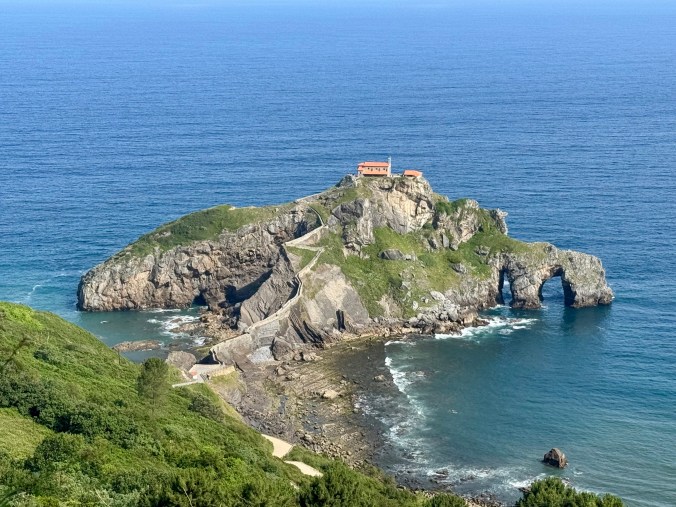
From Bilbao, we briefly headed north to see the island of San Juan de Gaztelugatxe (good luck pronouncing that), which is better know as Dragonstone, in the Game of Thrones and House of the Dragon TV series. Mark had discovered this gem and so we took a detour to check it out. There is a hermitage built on the island and the views from the coastline were amazing.
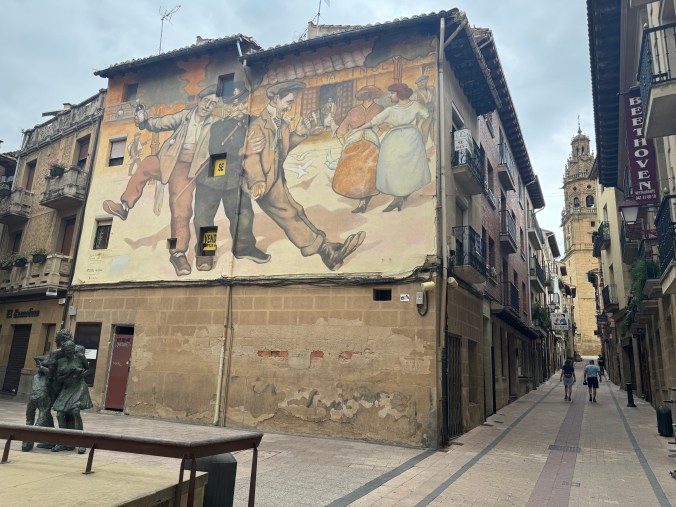
We left the Northern coast of Spain and headed south towards the Rioja region, home to the best wines from Spain. Our first stop was Haro and we stopped for lunch at a restaurant called Terete, which is very famous for their lamb. A few of us ordered the roast lamb, which is cooked and served in a massive clay dish. It was lovely and we ordered it with some delicious, sweet roasted peppers and white asparagus.
After lunch we checked into our apartment, which turned out to be right on the main square of Haro. It was a brand new apartment and Mark was very excited to see that it had four separate bedrooms with king beds in them. No more couches or sharing a bedroom with Dennis and Linda amidst a symphony of snoring.
Five minutes after arriving, Rob went to check out the balcony overlooking the main square and smacked his head on the roller shutter. Linda and Rob have now both brained themselves on those things. I’m glad these roller shutters are not common in Australia, because all of my friends would have flat foreheads by now.
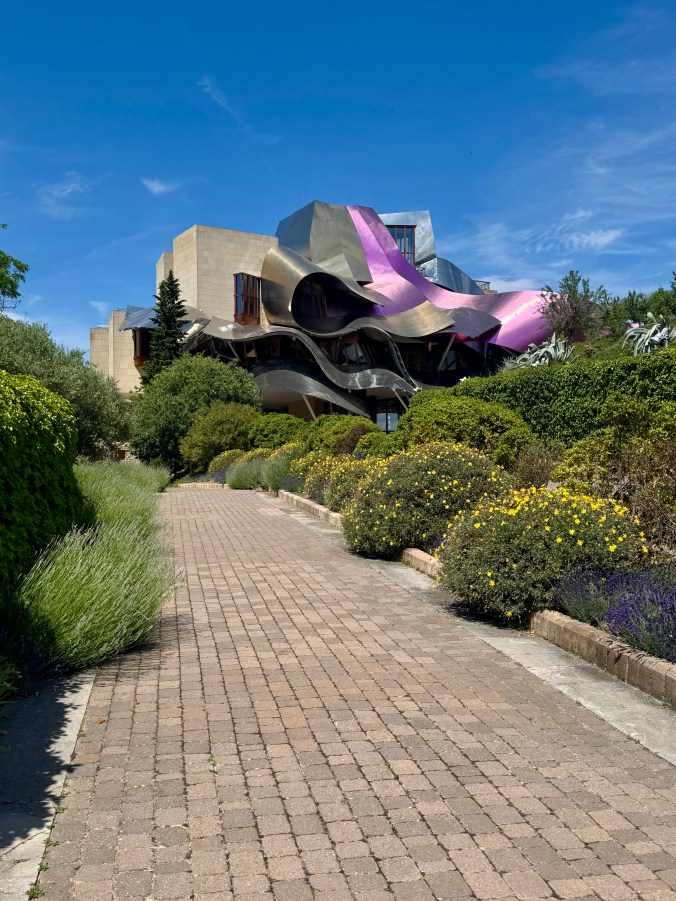
We stayed in Haro for the following three nights, during which time we explored the Rioja region. We started at Marques De Riscal, a very famous Rioja winery, where we toured the production and storage facilities, standing in a room amongst 3.5 million bottles of wine, which was next to another room with 4 million bottles. That’s a lot of plonk. The winery is home to a hotel, which was designed by Frank Gehring of Guggenheim Museum fame. The building is supposed to represent the colours of wine and the foil around the top of a wine bottle. You be the judge on that, but the building was super impressive.
It turned out that this was the first wine tasting Mark had ever been to, and he really enjoyed it. I’m sure it helped that we paired the wines with Spanish Chorizo. He enjoyed it so much, he snaffled three extra glasses of wine and a plate of chorizo from another table that didn’t seem to have anyone on it.
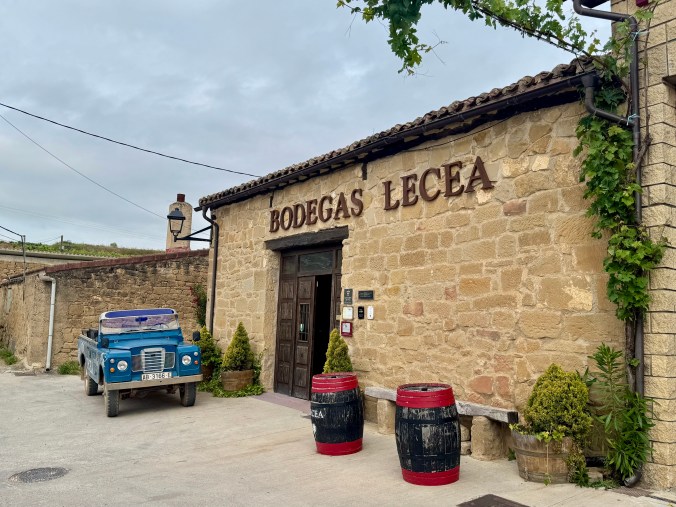
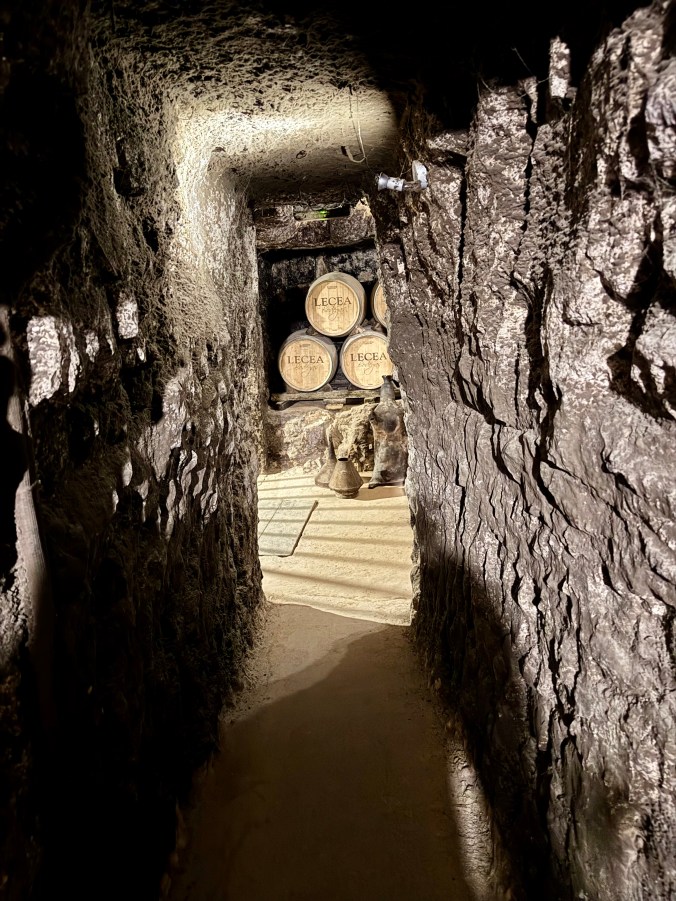
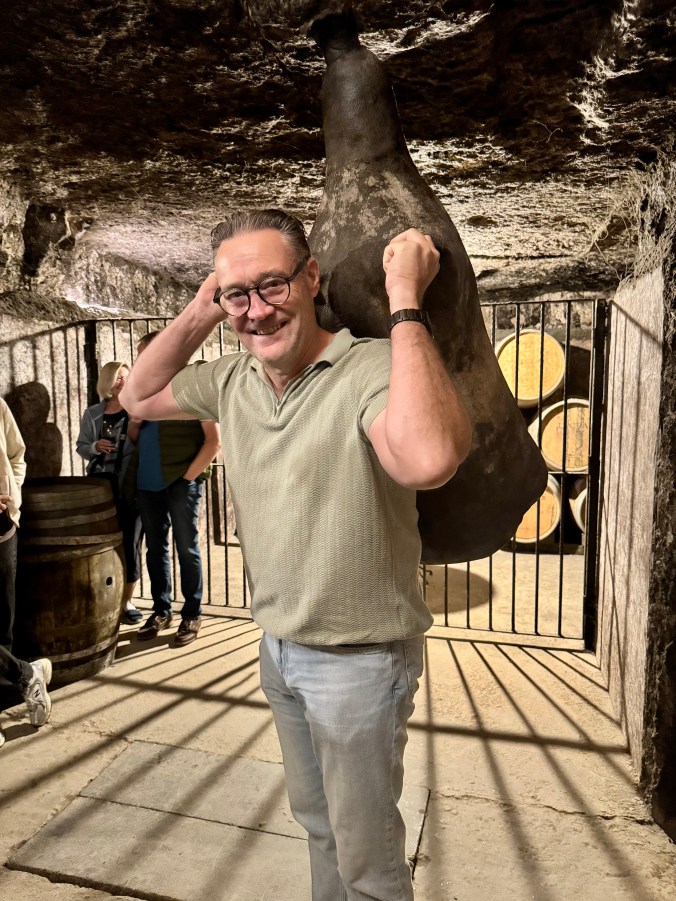
Lidia and I also visited another winery in Rioja which was the opposite of Marques De Riscal in every way. Rather than state of the art facilities, at Bodegas Lecea (pronounced Lethea) they make and store their wines in 15th century caves. Every year they have a festival where they still stomp the grapes with their feet. They even showed us how they used to carry the wine from the cellar using the inside-out skin of a goat. Fortunately, they don’t use this method to carry the wine any more. “A hint of goat” is not something you want to add to your tasting notes when you’re enjoying a bottle of Gran Reserva.
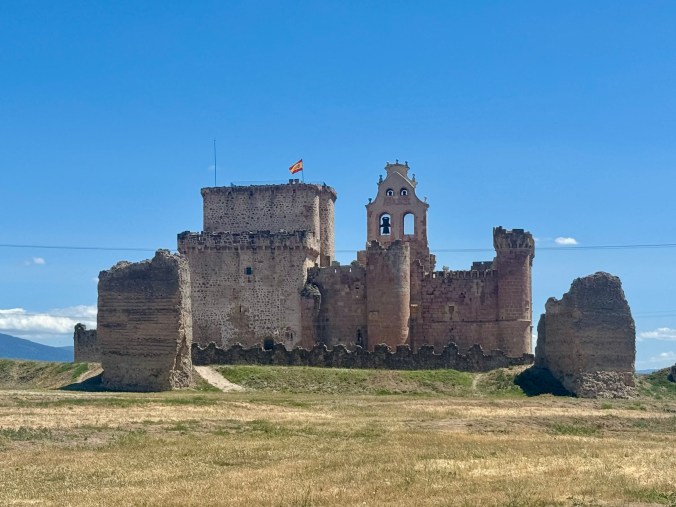
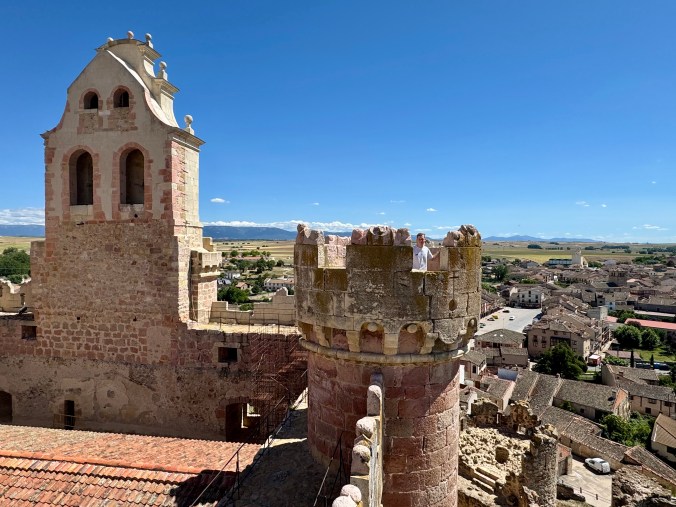
From Haro we drove to the stunning city of Segovia. On the way, Lidia, Linda, Mark and myself were in one car. We stumbled across an old castle and stopped to take a look. It turns out it was an ancient, 12th century fortress. There were absolutely no other tourists there and the girl at the booth out the front let us in for free. Mark was like a kid in a candy store, running up and down every staircase. We spent the next hour and a half exploring it. It was fascinating!
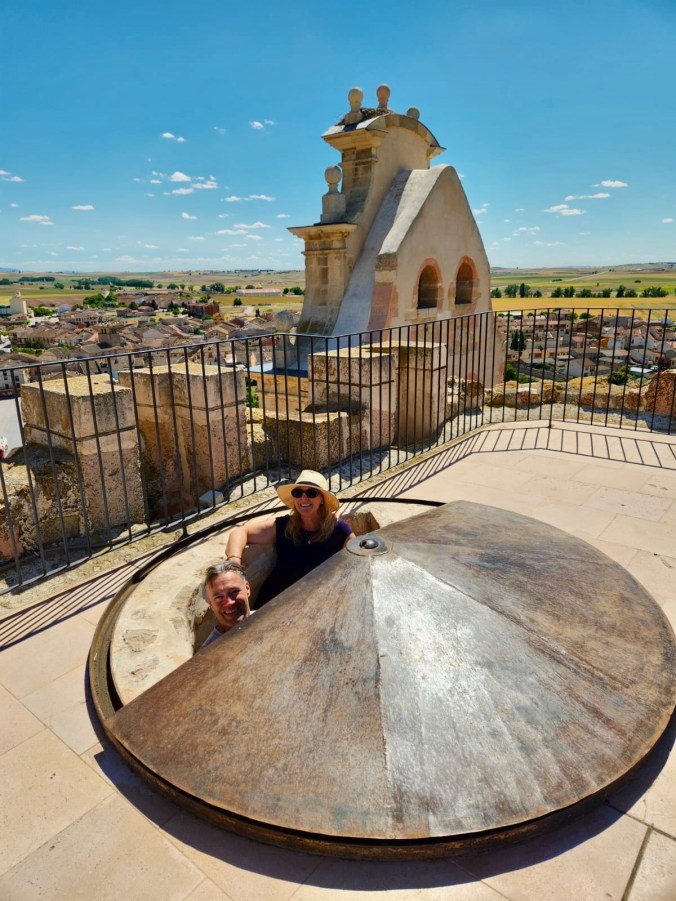
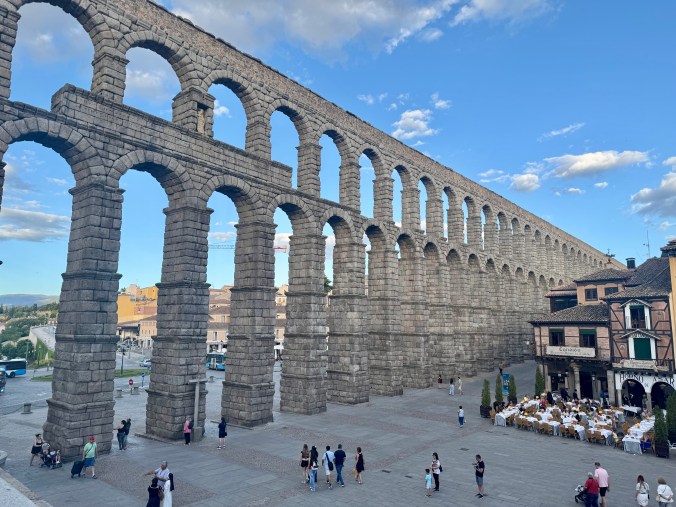
Then it was on to Segovia. This place has the wow factor in spades. A UNESCO listed town built on the top of a mountain, Segovia has expansive views right across the area. It also has an intact, 17-kilometre Roman aqueduct that was built in the 1st century, A.D. and was in use until 1973. At its highest point it stands at almost 29 metres high. It is mammoth.
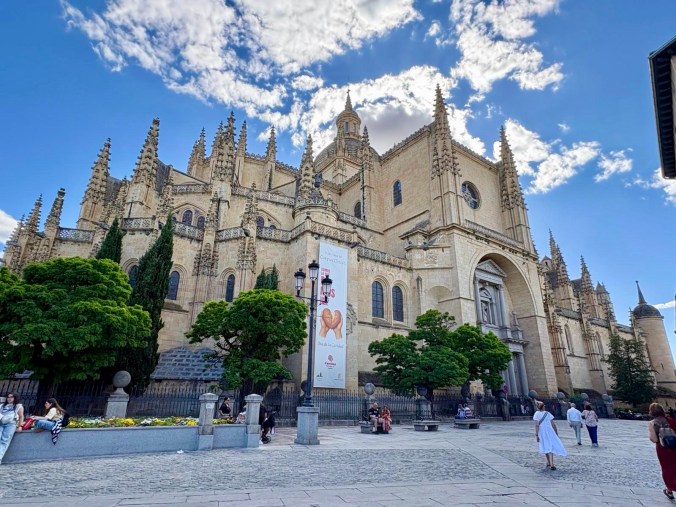
Segovia is also home to a massive, gothic cathedral and the Alcazar, which is a medieval castle built in the 12th century that looks like it was built last year. It was home to many Spanish kings and is a spectacular piece of architecture.
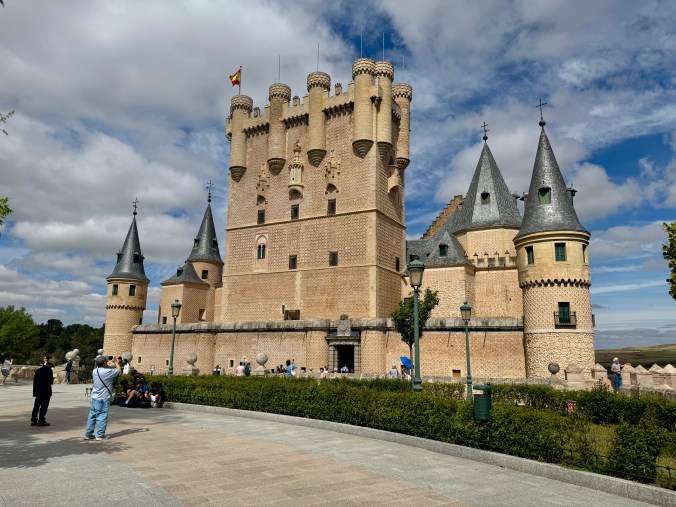
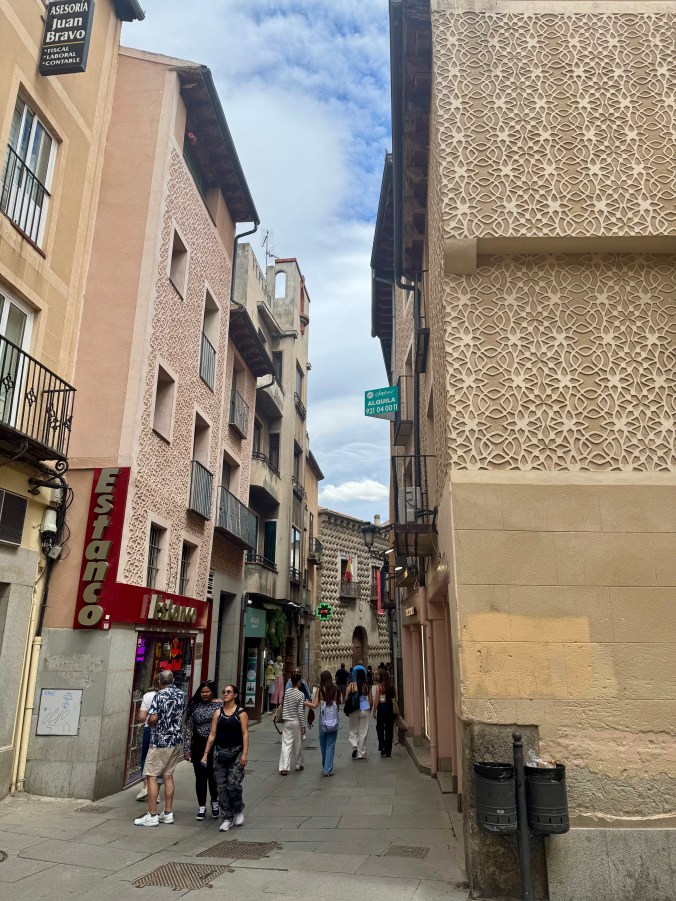
The castle, like many of the buildings in Segovia, employs a specific architectural feature called sgraffito. This method involves rendering the building, then applying a second layer of rendering before the bottom layer completely dries. They then etch a pattern on the top layer and use specific tools to scratch away parts of the top layer to reveal beautiful geometric patterns. They are so perfect they look like they are machine-made, however Segovia is very proud of this practice, and you see it used all over the city.
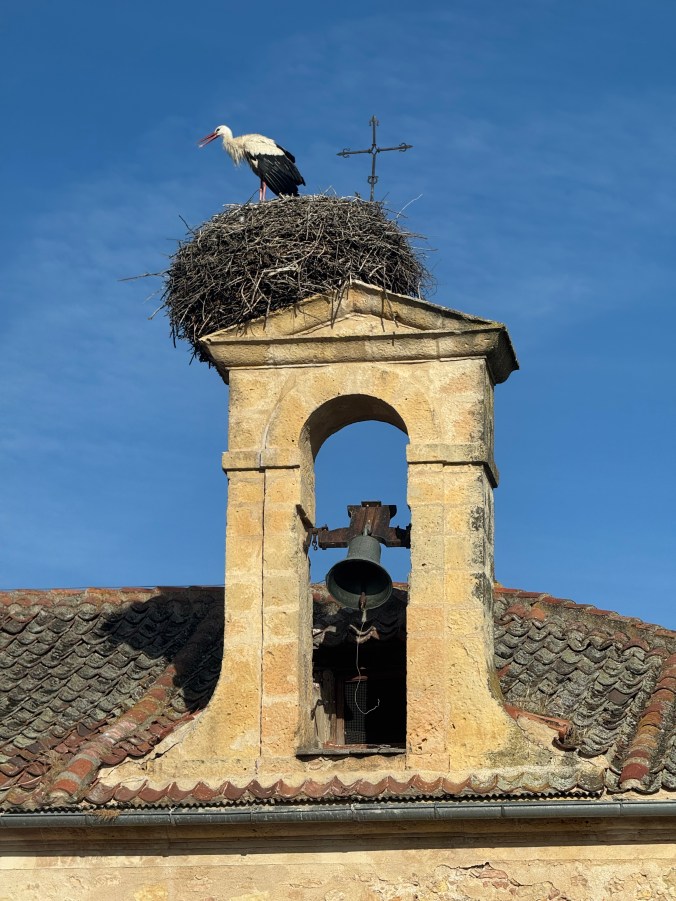
I particularly loved the nesting white storks that were abundant in the city. They build their massive nests on the top of trees and almost every tower in the city, of which there are many. There was a bell tower right outside our hotel room and I loved checking on my stork many times a day.
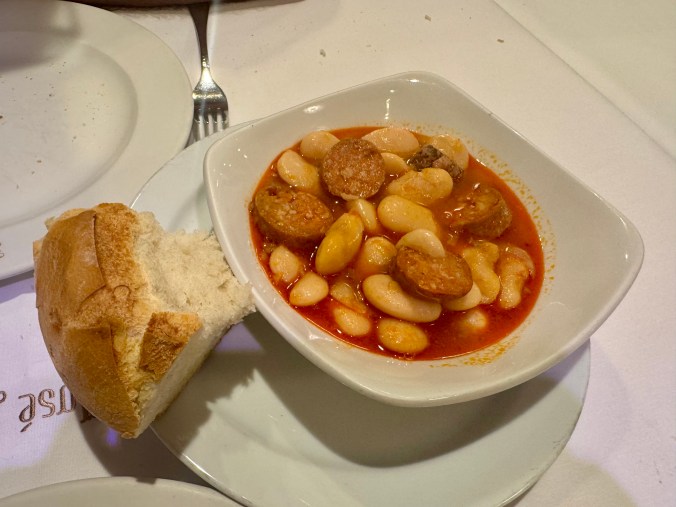
The restaurants in Segovia were wonderful, being famous for their roast suckling pig, slow roasted in a wood fired oven. What we particularly enjoyed though, was a local dish called Judiones de la Granja, which was a stew made in a clay pot with huge white beans, chorizo and pancetta. It is served in the clay pot and is totally delicious.
It is safe to say that Mark was making the most of the culinary treats on offer in Spain and his newfound discovery of wine. On the last morning in Segovia, we looked over at his table to see him enjoying a red wine with his breakfast! I’ve heard of pairing wine with food, but never with bacon and eggs at 8:00am!
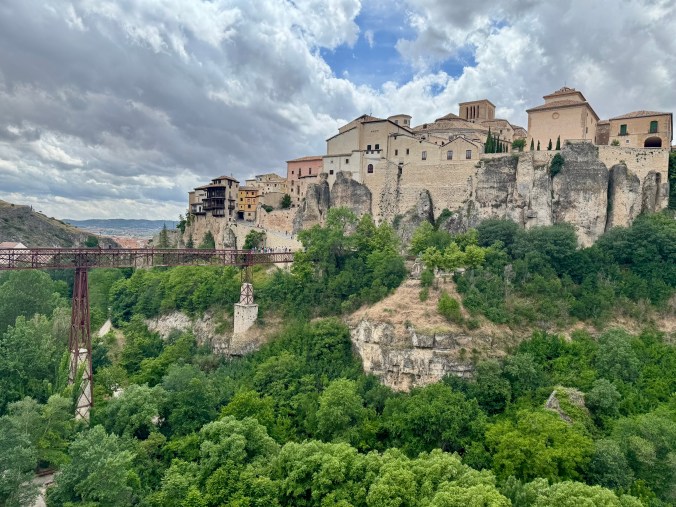
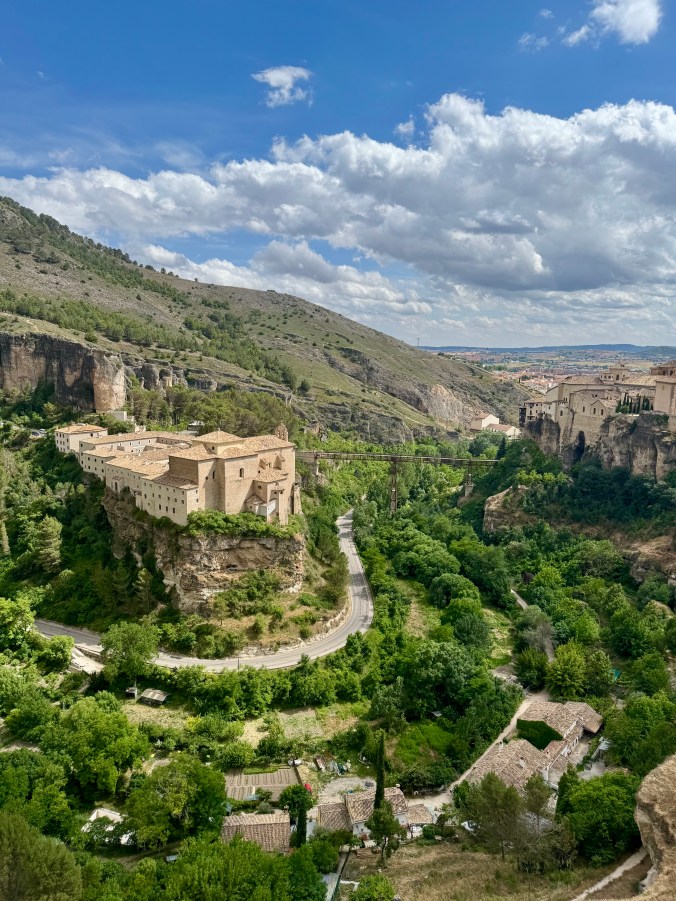
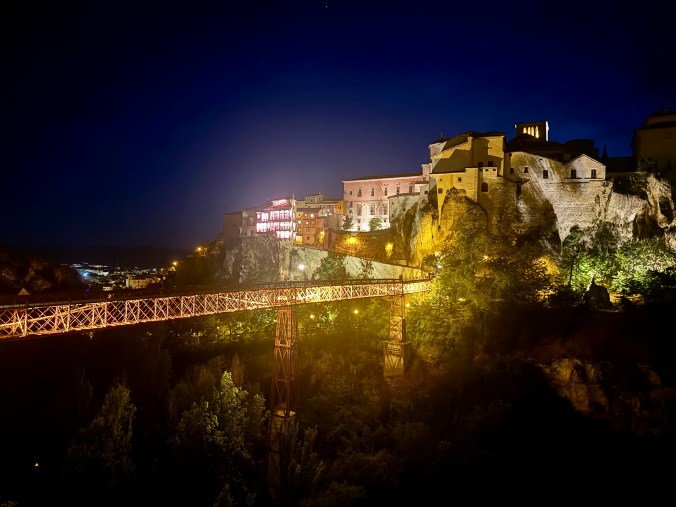
After a couple of nights in Segovia, we made our way further south to a place called Cuenca. If we thought Segovia had the wow factor, Cuenca even managed to top that. The town is built on a cliff side, with some of the buildings seemingly hanging off the cliff. Our hotel, formally a convent, was ideally located opposite the cliffside, which you had to access via a long, narrow bridge spanning a deep chasm. The views from both sides were nothing short of spectacular. Spain certainly has its fair share of eye-popping scenic cities, and between San Sebastian, Segovia and Cuenca, we were left awestruck.
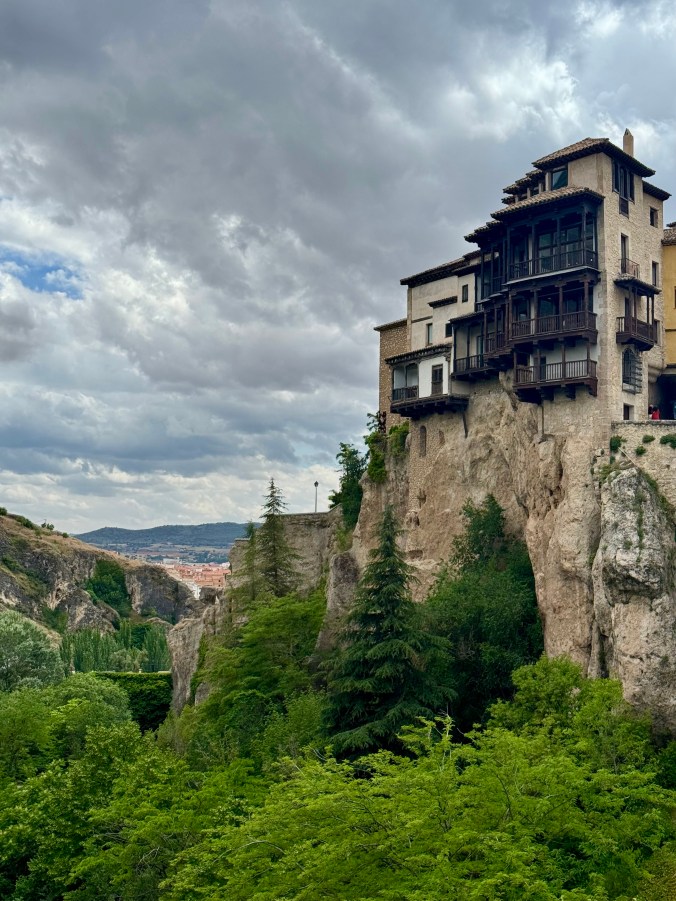
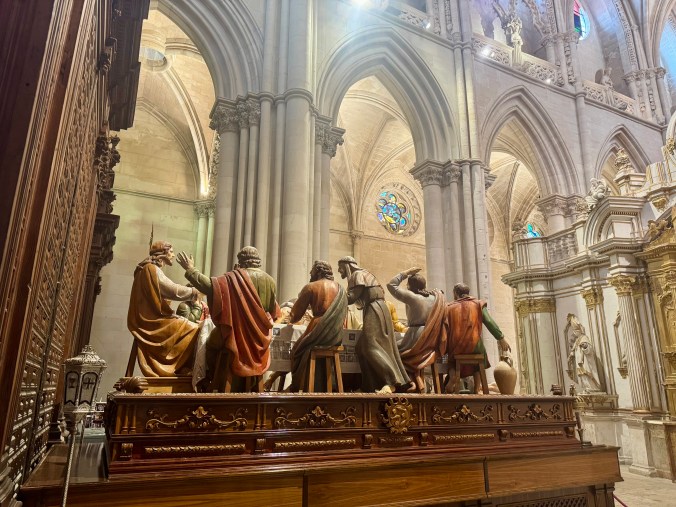
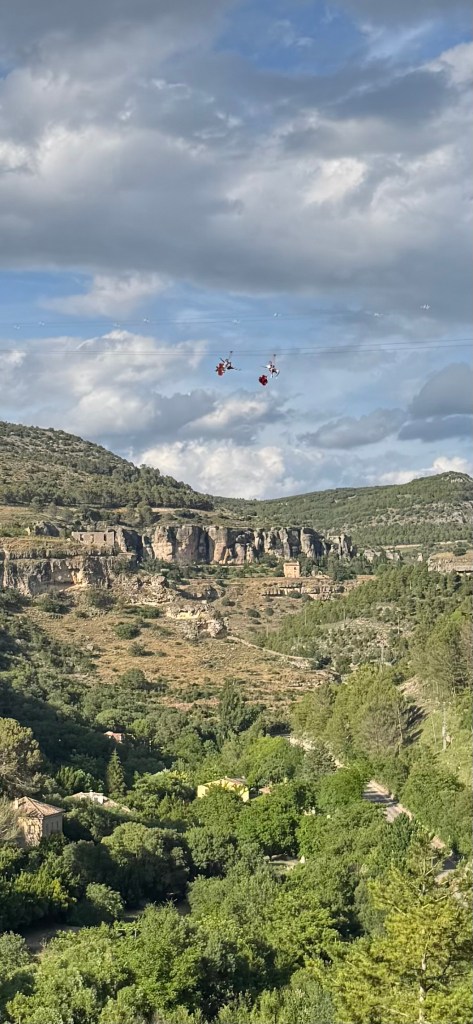
We walked around Cuenca and popped into their cathedral for a look. There was a life-sized scene of The Last Supper in the cathedral and Linda looked at it and said, “Is that the 12 apostles having lunch?” We all laughed so hard that one of the attendants asked us to leave! We then made our way up to the top of the old town, taking stacks of pictures of the unbelievable scenery along the way. At the top of the hill, Mark and Rob decided to wait around for another couple of hours in order to take a zipline to the other side of the chasm.
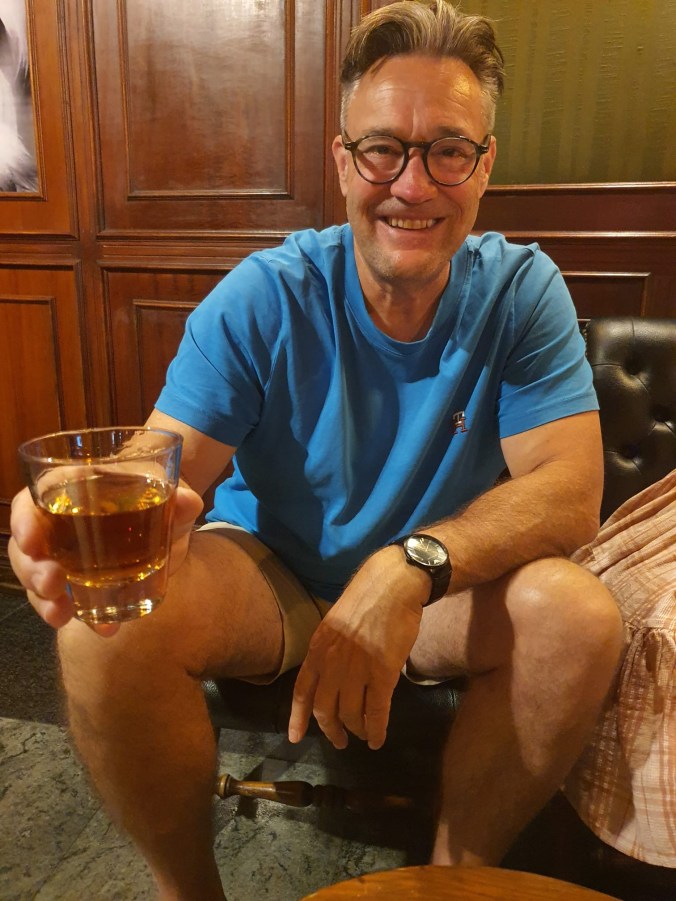
That night, we received a message from Dennis, Linda and Mark to join them for a drink in a local bar they had discovered. It was a tiny bar, chock full of chesterfield chairs and music from the 1920s and 30s, and we enjoyed some tuna croquettes and a drink. I ordered a neat whisky, and the bartender brought a bottle of Talisker over to the table with a glass. He started pouring me a shot, and then kept pouring, and pouring, and pouring. There was half a glass of straight single malt in that glass, and I needed Mark and Dennis to help me drink it. I was dreading the bill, since a shot that large in Australia would probably cost about $120. When the bill came, it was only 11 euro! We rolled out of there, took some magnificent pictures of Cuenca by night and then fell into bed.
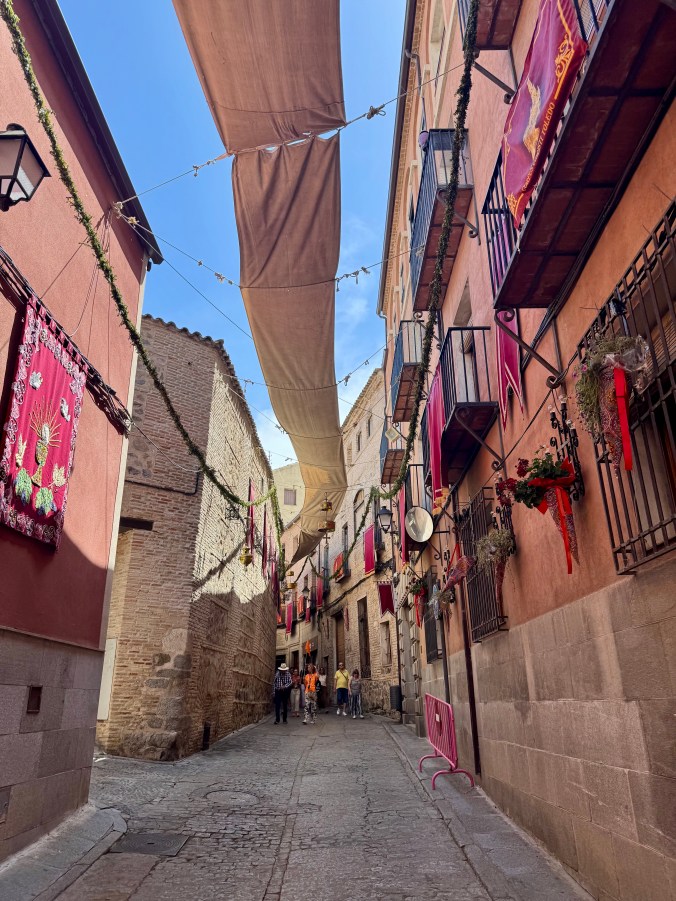
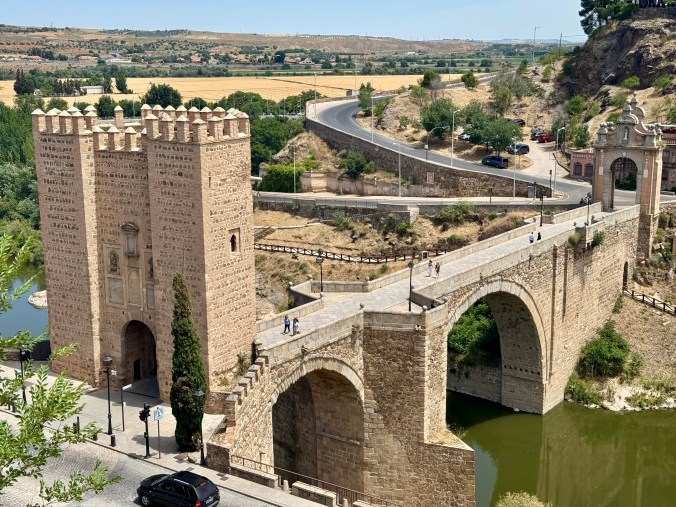
The next day we drove to yet another spectacular Spanish town, Toledo. This medieval town was full of life with winding, cobble-stoned streets lined with flags. The original Roman bridge was perfectly preserved and the city gates impressive. We enjoyed yet another local dish called carcamusas, which is a pork and potato casserole, again baked and served in a clay dish.
Linda, Dennis and Mark decided to go to a Spanish theme park called Puy du Fou, which is famous for “the best show in the world”. The Tomasovics tended to agree, saying it was absolutely spectacular, although Dennis was astounded that they recreated an execution by firing squad in front of all the kids in the audience!
Toledo is very famous for its steel forging and there are many shops displaying swords, knives and other steel products in their windows. Lidia was quite taken with the knives, and we went into a knife shop to choose one. They were all individually hand-made and forged from 120 layers of steel. She narrowed the choice down to four knives and finally chose one with an olive wood handle. She says she didn’t choose the knife, but the knife chose her, like a wand in Olivander’s wand shop in Harry Potter.

